
PCVS 2026
Smart Control Systems for Global Sustainability and Resilience
Advancing process control, intelligent systems, optimization, and education for a more resilient future.
A platform for ideas, innovation and collaboration
The Process Control Virtual Symposium brings together academia, students, researchers, and industry experts to share knowledge in process control and related disciplines.
This year's theme highlights the role of smart control systems, AI-enabled decision support, and resilient engineering solutions in addressing sustainability challenges across industries.
What to expect
- Oral presentations for conference participants
- Simulation project competition for students
- Hybrid participation for greater accessibility
- Presenter and competition recognition
Who should attend
- Academicians and researchers
- Process engineers and technologists
- Postgraduate and undergraduate students
- Industry experts and practitioners
Learn from leading experts
Four keynote sessions across both days, from plant-wide control and sustainability to soft sensors and AI tutoring for process control.
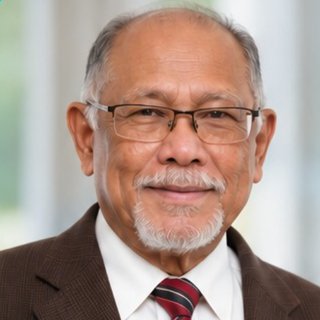
Prof. Emeritus Dato' Ir. Dr. Wan Ramli Wan Daud
Department of Chemical & Process Engineering, Faculty of Engineering & Built Environment, Universiti Kebangsaan Malaysia (UKM), Malaysia
Integrating plant-wide control in final year process plant design
Biography
Prof. Emeritus Dato' Ir. Dr. Wan Ramli Wan Daud FASc FTWAS FIChemE is Emeritus Professor (2024–) at the Department of Chemical & Process Engineering, Faculty of Engineering & Built Environment, UKM. He holds a first-class BEng in chemical engineering from Monash University (1978) and a PhD from the University of Cambridge (1984). Over more than four decades at UKM he served as Head of Department, Deputy Dean, Founding Director of the Fuel Cell Institute and UKM-Petronas Professor of Sustainable Hydrogen Energy.
A Fellow of the Academy of Sciences Malaysia, The World Academy of Sciences and IChemE, and Founding President of the Malaysian Association of Hydrogen Energy, he led the development of Malaysia's Hydrogen Energy and Fuel Cells Roadmap (2006) and Hydrogen Economy and Technology Roadmap (2023). He received the Merdeka Award 2016 and has been named a Highly Cited Researcher and one of the world's top 2% scientists.
His research covers green hydrogen, fuel cells and drying technology. He holds 30 patents, has published over 430 international journal articles (Google Scholar h-index 81), and has delivered more than 60 international plenary and keynote lectures.
Day 1 · 25 Nov · 10:00–10:45 · Dewan Seminar & MS Teams
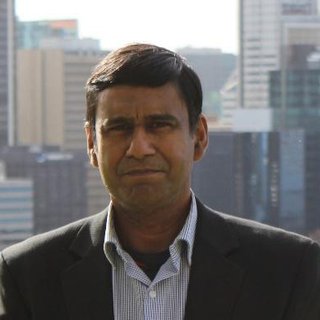
Professor Wahidul K. Biswas
School of Civil and Mechanical Engineering, Curtin University, Australia
Why Does Process Control Matter for Sustainability?
Biography
Professor Wahidul Biswas is Deputy Director of the Sustainable Engineering Group in the School of Civil and Mechanical Engineering at Curtin University. He has led extensive life cycle assessment (LCA) and industrial symbiosis research for Australia's agriculture, alternative fuels, construction, manufacturing, mining and water sectors, including recent LCA projects on iron ore and steel, alumina, cement, green steel and green certification for South32, Fortescue, Rio Tinto, Alcoa, GFG and Adbri Cement.
He is currently collaborating with Indonesian universities on sustainable pathways for red mud valorisation in bauxite mining, jointly funded by the Australian and Indonesian governments. He teaches Life Cycle Management, Industrial Ecology, Eco-efficiency, and Ethics and Sustainability in Engineering, and is the author of the Wiley textbook Engineering for Sustainable Development: Theory and Practice. He serves on Standards Australia/Standards New Zealand committees on GHG emissions from LNG and has attracted around AUD 3.5 million in research funding.
Day 1 · 25 Nov · 15:15–16:00 · Dewan Seminar & MS Teams
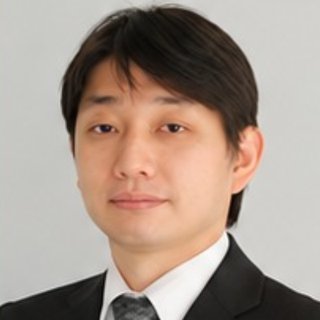
Professor Yasuki Kansha
Department of General Systems Studies, Graduate School of Arts and Sciences, The University of Tokyo, Japan
Controller Design with Soft Sensors: examples of HVAC
Biography
Prof. Yasuki Kansha earned his bachelor's degree from Kyoto University in 2002 and a PhD in chemical engineering from the National University of Singapore in 2008. He joined the Collaborative Research Center for Energy Engineering, Institute of Industrial Science, The University of Tokyo, as Project Associate Professor in 2012, and moved to the Graduate School of Arts and Sciences in 2018. He is now Professor at the Graduate School of Arts and Sciences and the Department of Chemical System Engineering, Graduate School of Engineering, The University of Tokyo.
His research spans process systems engineering, including modelling, design, control and optimisation. He co-authored Advanced Energy Saving and its Applications in Industry on self-heat recuperation technology. Since 2018 he has led the Kansha Laboratory on “Process Systems Design for Sustainable Energy Society”, working on process design, process control and instrumentation (including soft sensors and energy-harvesting wireless sensors), and systems optimisation for hydrogen, biomass and CO₂ utilisation.
Day 2 · 26 Nov · 11:30–12:30 · MS Teams · Chair: AP Ir. Ts. Dr. Liew Peng Yen (MJIIT, UTM KL)
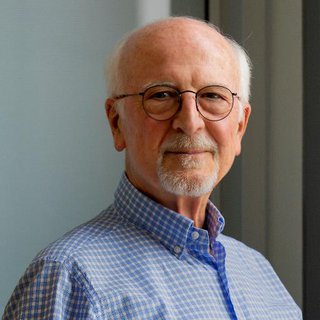
Dr. George Stephanopoulos
A.D. Little Professor Emeritus, Massachusetts Institute of Technology (MIT), USA · Professor, Arizona State University (ASU), USA
Chat with GS: An Intelligent Tutor for Process Dynamics and Control
Biography
George Stephanopoulos is the A.D. Little Emeritus Professor of Chemical Engineering at MIT and holds a joint professorship in the School for the Engineering of Matter, Transport and Energy and the School of Molecular Sciences at Arizona State University. He studied at the National Technical University of Athens, McMaster University and the University of Florida, has taught at Minnesota, NTUA, MIT and ASU, and served as Chief Technology Officer and Board member of Mitsubishi Chemical Corporation.
A member of the US National Academy of Engineering and Fellow of the American Academy of Arts and Sciences, he has received AIChE's Colburn, Walker and Founders Awards and was named one of the 100 Chemical Engineers of the Modern Era. He wrote the classic Chemical Process Control: An Introduction to Theory and Practice (1984) and Chemical and Biological Process Dynamics and Control (2025), with The Control Theory of AI Agents due in 2026. He has published over 250 papers in process systems engineering.
Day 2 · 26 Nov · 12:30–13:30 · MS Teams · Chair: Dr Nur Hamizah
What you will gain
Connect research, education and industry practice in one accessible hybrid forum.
Research and innovation
Explore current work in process control, artificial intelligence, simulation and education.
Meaningful connections
Build networking and collaboration opportunities between academia and industry.
Sustainable engineering
Support smarter, more resilient and sustainable engineering solutions.
Recognition
Receive participation certificates and compete for presenter or project awards.
Two ways to participate
Present research through the conference programme or showcase a simulation project in the student competition.
Conference Programme
Share your research and ideas through oral presentation sessions.
- Physical and online presentation modes
- Engagement with researchers and practitioners
- Relevant process systems engineering topics welcomed
Simulation Project Competition
Showcase innovative simulation and process-control projects.
- Online project presentation and evaluation
- Open to students individually or in groups
- Subject to final competition rules and instructions
All participants matter. Certificates will be provided to all participants and winners.
Conference tracks
Contributions are welcomed across contemporary control, optimization, simulation, education and safety.
Important dates
Keep these milestones in view as you prepare your abstract or simulation project.
- Abstract & Project Submission Deadline
- Notification of Acceptance
- Registration Deadline
- Conference Date
Where to join
Attend in person in Kuala Lumpur or join online from anywhere in the world.
Hybrid format
- Physical venue (Day 1)
- Dewan Seminar, Menara Razak, Universiti Teknologi Malaysia (UTM) Kuala Lumpur
- Online
- Microsoft Teams. Day 1 runs parallel online rooms (Room 1 & Room 2); Day 2 is fully online.
- Time zone
- All times are Malaysia Time (GMT+8)
Conference programme
Two days of keynotes, parallel oral presentation sessions and the simulation project competition. Times are Malaysia Time (GMT+8).
Download program book (PDF)Conference & keynotes
- 09:00–09:30
-
09:30–10:00
Inauguration of PCVS 2026
Universiti Teknologi Malaysia (UTM)
-
10:00–10:45
Keynote 1: Prof. Emeritus Dato' Ir. Dr. Wan Ramli Wan Daud (UKM)
Integrating plant-wide control in final year process plant design
Dewan SeminarJoin on MS Teams ↗ -
10:45–11:00
Tea break
-
11:00–12:30
Parallel oral sessions 1–3
-
Session 1 · Artificial Intelligence & Machine Learning
11:00–12:30 · Chair: Noraini Binti Mohd
Dewan SeminarPresentations (6)
- Interpretable Artificial Neural Network Modelling of Congo Red Adsorption onto CTAB-Modified Clinoptilolite Granules: Predictive Robustness and Time-Dependent Sensitivity AnalysisAina Sofiya Binti Mahat, Universiti Teknologi MARA (UiTM)
- Enhancing Graduate Employability through Digital Capabilities: The Roles of Sustainable Performance and Institutional SupportMba Victor Chidera, ALFA University College
- Machine Learning Modelling and Optimisation of Colour Removal from Laboratory Wastewater Using Untreated and NaOH-Treated Activated CarbonAisyah Zahra Ab Rahim, UiTM Shah Alam
- Setpoint Bias Correction and Particle Swarm Optimization Tuning of Cascade Temperature Control for Palm Process Residue RecoveryGoh Pei Tung, UCSI University
- Multi-Output Artificial Neural Network Modelling of Congo Red Adsorption onto CTAB-Modified Clinoptilolite Pellets: Predictive Performance and Model ReliabilityRaihanah binti Md. Kahruddin, Universiti Teknologi MARA (UiTM)
- Does LLM Capability Spark Employee Innovation? A Mediation Model of Algorithmic Psychological SafetyJamak Amrollahifar, ALFA University College
-
Session 2 · Process Optimization & Simulation I
11:00–12:00 · Chair: Mohd Farid bin Atan
Join MS Teams · Room 1 ↗Presentations (4)
- Beyond the Mouse Click: Transforming Process Simulation Pedagogy to Train Future-Ready Industrial Problem-SolversMohd Kamaruddin Bin Abd Hamid, Universiti Malaysia Sabah
- Digital Twin for Well-to-Surface Optimization of Cyclic Steam Stimulation (CSS) and Sucker Rod Pump (SRP) Operations for Heavy Oil Wells of Baghewala FieldSindhukavi S, St. Joseph's College of Engineering
- Dimensionless Group Analysis of Chemical Looping Reducing ReactorChyntami Fredella Sitorus, Curtin University Malaysia
- Dynamic Arithmetic Optimization of CO₂ Adsorption Using a Gaussian Process Surrogate with Energy AssessmentFakhrony Sholahudin Rohman, Universiti Malaysia Sabah
-
Session 3 · Advanced Process Control
11:00–12:15 · Chair: Nurhazwani binti Yusoff Azudin
Join MS Teams · Room 2 ↗Presentations (5)
- From Controllability Analysis to Controller Performance: A Simulation-Based Framework for MIMO Process ControlTang Hong Ming, Xiamen University Malaysia
- Modeling and Control of Industrial Boiler System Using Model Predictive ControlDinie bin Muhammad, Universiti Teknologi Malaysia
- Model Predictive Control of Pulsation-Induced Piping Vibration in Reciprocating Compressor Systems Using a Semi-Active Tuned Mass DamperAhmad Malahfji, American University of Ras Al Khaimah
- Simplified PID Control for H₂/CO Optimization in Biomass GasificationKok Yu Hui, The University of Tokyo
- Water Quality Sensor Accuracy in a Smart Coffee Wastewater Treatment SystemRinjani Ratih Rakasiwi, University of Tanjungpura
-
Session 1 · Artificial Intelligence & Machine Learning
-
12:30–14:00
Lunch break & Zuhr prayer
-
14:00–15:00
Parallel oral sessions 4–6
-
Session 4 · Process Simulation / Advanced Process Control / Process Safety
Chair: Nur Syuhada' Binti Mohamad Ali
Dewan SeminarPresentations (4)
- A Bayesian Integral Framework for Offset-Free Nonlinear Model Predictive Control under Plant-Model MismatchAyman William Hermansson, Heriot-Watt University Malaysia
- Ruptured at Normal Pressure: Hazardous-Substance Risk Assessment and Process Safety Lessons from a Polybutadiene Cement Sphere Explosion IncidentShaifulazri Zainulabidin, Universiti Teknologi MARA
- Sensitivity Analysis of a Dual Carbon Capture System Integrated with Bioenergy SystemSharmila Loganathan, UTM MJIIT
- Inferential Multivariable Model Predictive Control of a Condensate Fractionation Unit in Aspen HYSYS DynamicsNg Sheng Tat, Inprocess Technology and Consulting Group, S.L.U.
-
Session 5 · Process Optimization & Simulation II
Chair: Senthil Kumar Arumugasamy
Join MS Teams · Room 1 ↗Presentations (4)
- First-Principles Insights into Low-Temperature Water–Gas Shift on Cu(111) and Cu-Based Single-Atom Alloy SurfacesAbdulrauf Onimisi Ibrahim, Universiti Malaya
- Modelling and Optimization of CO₂ Absorption from POME Biogas Using MEA-Piperazine Solvent in Aspen HYSYSAbdul Muhaimin Bin Zailamzi, Universiti Malaysia Sabah
- Advancing Sustainable Energy Production: Simulation-Driven Optimization of Biomass-to-Biogas Conversion and Carbon Capture StrategiesMaryam Mohsen Mubarak Obeid, American University of Ras Al Khaimah (AURAK)
- Thermodynamic Assessment and Process Optimization of Sustainable Methanol Production via CO₂ HydrogenationSaid Ali Hamad, American University of Ras Al Khaimah
-
Session 6 · Process Simulation / Artificial Intelligence & Machine Learning
Chair: Jobrun Nandong
Join MS Teams · Room 2 ↗Presentations (4)
- Uncertainty-Aware Gaussian Process Regression for Ammonia-Nitrogen Soft Sensing in Wastewater Treatment PlantMohd Hardyianto Vai Bahrun, Universiti Malaysia Sabah
- AI-Assisted Optimization and Intelligent Control of a Thermoelectric Waste-Heat-to-Electricity Recovery SystemLoai Hassan & Salma Nagy Fathy, American University of Ras Al Khaimah
- Optimization of Direct Contact Membrane Distillation Using Green-Solvent-Fabricated Mixed-Matrix Membranes: RSM and ANN ModelingMujaroh Khotimah, Universiti Malaya
- Thermodynamic Modelling and Multi-Objective Optimization of an Adiabatic Compressed Air Energy Storage System Using Aspen HYSYSSalma Nagy Fathy & Ahmad Malahfji, American University of Ras Al Khaimah
-
Session 4 · Process Simulation / Advanced Process Control / Process Safety
-
15:00–15:15
Tea break
-
15:15–16:00
Keynote 2: Professor Wahidul K. Biswas (Curtin University, Australia)
Why Does Process Control Matter for Sustainability?
Dewan SeminarJoin on MS Teams ↗ -
16:00–16:15
Closing of Day 1
Competition, keynotes & awards
-
09:00–09:15
Simulation Competition OpeningJoin on MS Teams ↗
-
09:15–11:00
Competition Session 1
Chair: Mohd Fauzi Zanil
Join on MS Teams ↗Projects (7)
- Reverse Engineering a Process-Control Program with REA: Recovering Control LogicMuhammad Syukur bin Mohd Sobbery & Muhammad Syakirin bin Kamil, Universiti Putra Malaysia (UPM)
- Haze-to-Harvest: Development of a Data-Driven Decision-Support and Optimization Tool for Low-Cost Rainwater Treatment for Smallholder Vegetable Farmers in MalaysiaMohd Nur Aiman Syazani Bin Huzairi, Universiti Putra Malaysia (UPM)
- Network-Based Adaptive Pressure Control for Energy Optimization in Industrial Utility Systems: Experimental Validation in Cooling Water and Compressed Air NetworksShahin Tavassoli, ALFA University College
- Machine Learning Surrogate-Assisted Genetic Algorithm for Optimising Colour Removal from Laboratory Wastewater Using Activated CarbonNelly Edlyn Fadzlunnizam, UiTM Shah Alam
- SteamOpt: A MATLAB-Based MILP Optimiser for Industrial Steam Utility SystemsSiti Nor Azreen Binti Ahmad Termizi, Universiti Malaysia Perlis
- AI Based Performance Prediction and Autonomous Recycle Control of an Ultra Low Pressure Reverse Osmosis (ULPRO) Membrane System in Brackish Water TreatmentAzizullah Hanif, Universiti Malaya
- Multi-Objective Drying Process Parameter Optimization for Cauliflower DryingSoo Wei Hong, Universiti Malaysia Sabah
-
11:00–11:30
Break
-
11:30–12:30
Keynote 3: Professor Yasuki Kansha (The University of Tokyo, Japan)
Controller Design with Soft Sensors: examples of HVAC · Chair: AP Ir. Ts. Dr. Liew Peng Yen
Join on MS Teams ↗ -
12:30–13:30
Keynote 4: Dr. George Stephanopoulos (MIT & Arizona State University, USA)
Chat with GS: An Intelligent Tutor for Process Dynamics and Control · Chair: Dr Nur Hamizah
Join on MS Teams ↗ -
13:30–14:30
Lunch break & Zuhr prayer
-
14:30–16:15
Competition Session 2
Chair: Dinie Muhammad
Join on MS Teams ↗Projects (7)
- A Simulation-Based Study on the Energy Optimization of Hydrochloric Acid Production Using Aspen PlusKam Pui Shan, UPM
- Simulation of Blue Methanol Production from Natural Gas via an Internal Carbon LoopHizbullah bin Fathurrahman, UTM (MJIIT)
- Adaptive Process Control and Recovery Optimization for Scaling-Constrained Reverse Osmosis DesalinationMaithaa Al-Farsi & Fadoua Al-Farsi, Sohar University
- Dynamic Modelling and Predictive Control of an Adiabatic Compressed Air Energy Storage System Under Variable Operating ConditionsSalma Nagy Fathy & Ahmad Malahfji, American University of Ras Al Khaimah
- Performance Evaluation of Membrane-based Separation for Post Combustion Carbon CaptureNoor Fatina Emelin binti Nor Fadzil, UTM (MJIIT)
- AI Grambangla HealthCareShaydur Rahman, Wio Care
- Hydrogen Blending Pipeline Health Index (HBPHI): An AI-Powered and Aspen HYSYS-Based Platform for Safe Hydrogen Blending in Natural Gas PipelinesMaithaa Al-Farsi & Fadoua Al-Farsi, Sohar University
-
16:15–16:30
Break
-
16:30–17:00
Closing & Award Ceremony
Best Presenter Award(s) · Gold, Silver & Bronze Awards for the Simulation Competition
Join on MS Teams ↗
All Day 2 sessions are held online in one Microsoft Teams meeting: join Day 2 on MS Teams.
Presenter & participant resources
Everything you need to present and take part. Presenters, please prepare your slides with the official template and use the virtual background when joining on Microsoft Teams.
Program Handbook
Full two-day programme with keynotes, session rooms, chairs, presentation slots and Microsoft Teams links.
View & download ↗Presentation Template
Official PCVS 2026 slide template for oral presenters and simulation competition participants.
Download template ↗Virtual Background
Use it on Microsoft Teams: More › Video effects › Add new, then select the downloaded image.
Download background ↗Symposium Feedback
Tell us about your PCVS 2026 experience. The form opens after the symposium; your feedback shapes future editions.
Give feedback ↗Your work can travel further
Selected conference papers will be published in the ASEAN Journal of Process Control (AJPC). Participants can also receive recognition through presenter awards, project prizes and certificates.
Questions about PCVS 2026?
Contact the symposium coordinators for submission and participation enquiries.